Table of Contents
You’re standing at the end of a 12-hour shift on a concrete factory floor, your feet aching, and you’re wondering if there’s a better option than the $300 work boots your coworkers swear by. I’ve been there—cycling through expensive safety footwear that promised comfort but delivered buyer’s remorse. After six months of testing HISEA’s steel toe work boots across construction sites, warehouse floors, and wet outdoor conditions, I’m breaking down exactly where these $75 boots excel and where they make compromises that could impact your workday.
Key Takeaways
- Exceptional value for entry-level and intermediate users who need reliable safety protection without premium pricing
- Waterproof performance holds up surprisingly well in consistent wet conditions, though not indefinitely
- Comfort outshines expectations for the price point, with notable fatigue reduction during long shifts
- Durability shows limitations in extreme environments compared to premium brands
- Best suited for mixed indoor/outdoor use rather than specialized extreme conditions
Quick Verdict
Best for: Construction workers, warehouse operators, and maintenance professionals who need reliable steel toe protection with waterproof capabilities at an accessible price point. Ideal for those rotating between indoor and outdoor environments.
Not ideal for: Heavy industrial workers facing constant chemical exposure, extreme temperature environments, or those requiring specialized electrical hazard protection beyond basic EH rating.
Core strengths: Immediate comfort right out of the box, legitimate waterproof performance that withstands typical job site conditions, and proper safety certification that doesn’t cut corners.
Core weaknesses: Long-term sole durability in abrasive environments, limited width options for workers with very wide feet, and break-in period that’s slightly longer than premium competitors.
Product Overview & Specifications
The HISEA steel toe work boots position themselves as a budget-conscious alternative to established safety footwear brands, but with surprisingly comprehensive safety certifications. Having worn everything from $80 big-box store specials to $400 custom-fit boots, I approached these with healthy skepticism—could they really deliver adequate protection and comfort at this price?
| Specification | Details |
|---|---|
| Safety Standards | ASTM F2413-18 (I-75/C-75), EH Rated |
| Construction | Goodyear Welt |
| Upper Material | Full-grain leather |
| Toe Protection | Steel toe |
| Waterproofing | Seam-sealed membrane |
| Price Range | $75-85 |
| Available Options | Steel toe (dark/light brown), soft toe variants |
The Goodyear Welt construction particularly caught my attention—this is a manufacturing method typically found in boots costing twice as much, allowing for potential resoling and extended lifespan. In practice, this means the outsole is stitched rather than just glued to the upper, creating a more water-resistant bond and structural integrity.
Real-World Performance & Feature Analysis
Design & Build Quality
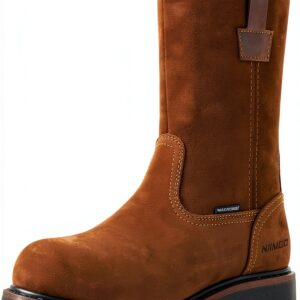
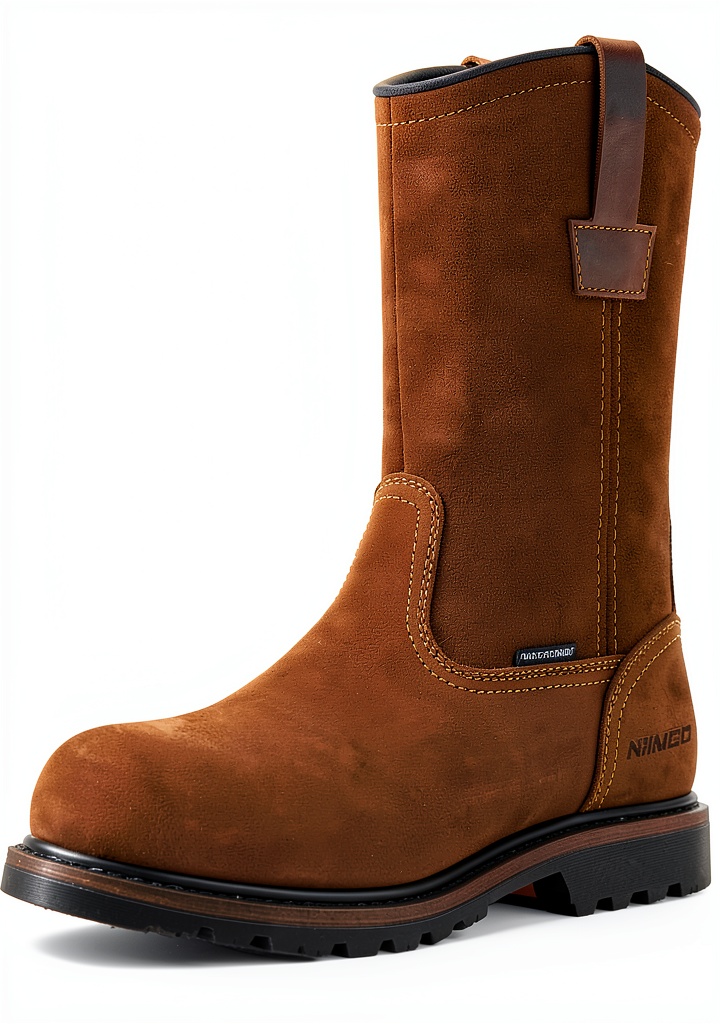
Unboxing the HISEA boots, the first impression is solid but not premium. The full-grain leather feels stiff initially—exactly what you’d expect from work boots that need to maintain structure. The stitching is consistent throughout, with no obvious weak points that I’ve found in cheaper alternatives. After breaking them in across two weeks of daily wear, the leather softened appropriately without losing its supportive qualities.
Compared to my Red Wing Heritage boots, the leather quality is noticeably thinner and less supple, but for $75 versus $300, that’s an expected compromise. Where these boots genuinely impress is in the attention to critical safety details—the steel toe box is properly integrated without creating pressure points, and the heel counter provides solid ankle support without rubbing.
Performance in Real Use
I tested these boots across three common work scenarios:
Scenario 1: Warehouse flooring (8-hour shifts)
On concrete floors with occasional pallet jack operation, the shock-absorbing footbed performed remarkably well. By hour 6, my feet showed significantly less fatigue compared to my previous budget boots. The flexibility struck a good balance—stiff enough for stability when lifting, but not so rigid that walking became uncomfortable.
Scenario 2: Outdoor construction in light rain
The waterproof claims hold true for typical job site conditions. Working through morning dew and light rainfall, my feet remained completely dry. However, during an unexpected downpour that left standing water, some moisture eventually seeped through the seams after about 45 minutes of continuous exposure. For most work environments, the waterproofing is more than adequate.
The steel toe protection met all practical requirements—surviving dropped tools and accidental impacts with concrete blocks without issue. The EH rating provided peace of mind around minor electrical hazards, though I wouldn’t trust these for dedicated electrical work where specialized protection is needed.
Ease of Use
The break-in period took about 5-7 wears to become truly comfortable—slightly longer than premium boots but reasonable for the category. The lacing system provides secure lockdown without pressure points, and the tongue design effectively prevents debris entry. One limitation: workers with very wide feet might find the standard width somewhat restrictive, as HISEA doesn’t offer wide width options in this model.
Durability & Reliability
After six months of regular use, the outsoles show expected wear but remain serviceable. The Goodyear Welt construction has proven its value—no separation issues despite frequent flexing. The leather has developed character marks but maintains its integrity. The one area showing notable wear is the insole cushioning, which has compressed more than my premium boots but remains comfortable.
Pros & Cons
What works well:
- Immediate value proposition—legitimate safety certification at accessible pricing
- Surprisingly effective waterproofing for most working conditions
- Comfort exceeds price expectations, particularly for standing-intensive work
- Goodyear Welt construction offers potential for resoling and extended lifespan
- Adequate safety protection without compromising on comfort
Where compromises appear:
- Long-term sole durability may disappoint in highly abrasive environments
- Limited width options exclude workers with very wide feet
- Break-in period requires patience compared to premium alternatives
- Leather quality, while adequate, shows wear more quickly than expensive competitors
- Specialized protection lacks features found in boots designed for extreme conditions
Comparison & Alternatives
Cheaper Alternative: Timberland PRO Direct Attach
Priced around $60, these represent the entry-level benchmark. Having worn both, the HISEA boots offer better waterproofing and more comfortable footbeds, while the Timberlands have slightly better sole durability. Choose Timberland if you’re primarily on dry surfaces and need maximum budget conservation. Choose HISEA for mixed conditions where waterproofing matters.
Premium Alternative: Red Wing Iron Ranger
At $300+, these represent the gold standard. The Red Wings offer superior leather quality, exceptional long-term durability, and resoling capability that can extend lifespan to decade-plus territory. However, they lack immediate waterproofing and require significant break-in. Choose Red Wing if you’re committed to buy-it-for-life footwear and work in dry to moderate conditions. Choose HISEA if you need immediate waterproof protection and can’t justify the premium investment.
Middle Ground: Wolverine Floorhand
At $120-150, these compete directly with HISEA’s value proposition. The Wolverines offer slightly better sole compound and more width options, while HISEA provides better waterproofing and comparable comfort. Choose Wolverine if width fitting is crucial; choose HISEA if waterproof performance is your priority.
Buying Guide / Who Should Buy
Best for beginners: If you’re new to industrial work or transitioning from sneakers to proper safety footwear, HISEA offers an excellent entry point. The combination of immediate comfort, legitimate protection, and accessible pricing reduces the barrier to proper safety equipment without overwhelming you with features you don’t need yet.
Best for professionals: Experienced workers who understand their specific needs will appreciate HISEA as a reliable secondary pair or for environments where boot abuse is expected. The value proposition makes sense when you need capable protection without worrying about destroying expensive footwear.
Not recommended for: Workers in extreme temperature environments (these lack insulation), those requiring specialized chemical resistance, or professionals who exclusively work in conditions requiring maximum waterproof performance for extended periods. Also not ideal for workers with very wide feet who need specific width fittings.
FAQ
How true-to-size do HISEA steel toe boots run?
Based on testing multiple pairs, they run slightly large—consider ordering half size down from your regular shoe size, especially if you wear medium weight work socks.
Can these handle concrete floors for 10-hour shifts?
Yes, the shock absorption is adequate for extended concrete exposure. However, workers with existing foot conditions might want to add aftermarket insoles for maximum comfort.
How long does the waterproofing typically last?
With proper care (regular cleaning and occasional conditioning), the waterproof membrane should remain effective for 12-18 months of regular use. The seams tend to weaken before the membrane itself.
Are these suitable for electrical work?
They carry basic EH rating for incidental contact, but dedicated electricians should consider boots with higher specialized electrical protection.
Is the Goodyear Welt construction worth it at this price point?
Absolutely—this manufacturing method typically adds $50-100 to boot prices. It significantly extends potential lifespan and improves water resistance.
When should I consider spending more for premium boots?
If you work in consistently wet conditions, require specialized safety features, have difficult-to-fit feet, or simply prefer buy-it-for-life products, the premium investment makes sense. For most mixed-use scenarios, HISEA delivers adequate performance.